A drafty bedroom in January usually tells you more than a sales pitch ever will. If your windows feel cold to the touch, stick when you open them, or show moisture between panes, you are not just dealing with an annoyance. You are looking at a project where the right window installation guide can protect comfort, energy performance, and the value of your home.
For most homeowners, the biggest question is not whether new windows are worth it. It is how to make sure the job is done properly. Product quality matters, but installation quality matters just as much. Even a well-built window can underperform if it is measured wrong, sealed poorly, or installed without attention to your home’s structure and local weather conditions.
What a good window installation guide should help you understand
A useful window installation guide should do more than explain how a window goes into a wall. It should help you understand the full process, from evaluating existing openings to choosing the right style, planning the timeline, and knowing what workmanship standards to expect.
That matters because not every installation is the same. A replacement window project in an older home is different from a new-construction installation. One may keep the existing frame if it is in good condition, while the other may involve a full tear-out down to the rough opening. The right approach depends on the age of the home, the condition of the current unit, and whether there is hidden water damage, shifting, or insulation loss around the opening.
Homeowners often focus first on glass, frame color, or grille style. Those details matter for curb appeal, but long-term performance usually comes down to fit, insulation, air sealing, and proper finishing. In a climate with hot summers, cold winters, and fast weather changes, those details are not optional.
Start with the condition of the existing window
Before choosing a product, it helps to assess what is happening with the current window. If the sash is hard to operate, the frame shows rot, or you feel consistent air leakage, the issue may be larger than the glass itself. Water staining on trim or soft spots in surrounding materials can point to a problem that should be addressed before a new unit is installed.
This is also where professional measurement becomes important. Homeowners are often surprised by how much variation exists from one opening to another, even in the same house. Walls settle. Older frames go out of square. Trim can hide issues that only become visible once the old unit is removed. Accurate measuring is one of the reasons factory-direct consultation and installation can save time, rework, and avoidable cost.
Replacement vs. full-frame installation
One of the most important decisions in any window installation guide is whether you need an insert replacement or a full-frame installation.
An insert replacement uses the existing frame if it is structurally sound. This can be a cost-effective option and often means less disruption to interior and exterior finishes. It works well when the frame is still in good shape and the goal is to improve glass performance, operation, and appearance without opening up the surrounding wall.
A full-frame installation removes the entire existing unit and installs a new frame into the rough opening. This is usually the better choice when there is rot, warping, water infiltration, or a need to improve insulation and sealing around the opening itself. It is a more involved process, but in some homes it is the right long-term investment.
There is no universal answer here. Lower upfront cost is attractive, but if the old frame is compromised, saving money today can lead to repair costs later. A trustworthy installer will explain which option fits your home and why.
Choosing the right window style for the space
Window style affects more than looks. It changes ventilation, cleaning access, sightlines, and even how the room feels day to day.
Casement windows are popular because they seal tightly and open fully for ventilation. Sliding windows can be practical in spaces where an outward-opening sash is not ideal. Hung windows suit many traditional homes, while fixed and picture windows work well where the goal is more natural light and an open view. Awning windows can be useful in bathrooms or basements because they allow airflow while maintaining privacy and weather protection.
The right choice depends on the room and the homeowner’s priorities. Energy efficiency, ease of cleaning, ventilation, safety, and design should all be part of the conversation. A manufacturer-installer with a broad product range can usually give better guidance because the recommendation does not have to be forced into a limited catalog.
How professional window installation should happen
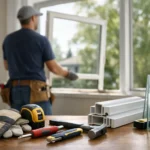
A clean, professional installation follows a clear sequence. First, the team protects the work area inside and outside the home. Floors, nearby furnishings, and landscaping should be treated with care. Old windows are removed carefully to reduce damage to surrounding finishes.
Once the opening is exposed, the installer checks for structural issues, moisture damage, and squareness. This step matters because the new window should never be installed into a compromised opening and simply covered up with trim. If repairs are needed, they should be addressed before the new unit is set.
The new window is then positioned, leveled, shimmed, and fastened according to the product and opening requirements. After that comes insulation and sealing. This is where many long-term performance issues begin or are prevented. Too little insulation can leave drafts. Too much expanding foam in the wrong place can affect operation. Poor exterior sealing can allow water intrusion over time.
After the unit is secured and sealed, the installer finishes the interior and exterior as required, checks operation, and cleans the work area. The final walkthrough should confirm that the window opens and locks properly, the caulking is neat, and the surrounding area is left clean.
Common mistakes homeowners should avoid
The most common mistake is comparing quotes based only on price. Lower pricing can be attractive, but homeowners should ask what is included. Does the quote cover removal and disposal of old units, finishing work, cleanup, warranty support, and any repairs if hidden issues are found? If not, the final cost may look very different once the project starts.
Another mistake is assuming all windows with similar appearances perform the same way. They do not. Frame construction, glass packages, spacers, weatherstripping, and manufacturing quality can all affect efficiency and durability.
A third mistake is underestimating installation standards. If the installer cuts corners on sealing, shimming, or finishing, even a good product can fall short. That is why many homeowners prefer a company that manufactures, supplies, and installs its own products. When one team controls the process from measurement to production to installation, accountability is clearer.
What to ask before you approve the project
A confident homeowner should know what they are buying and who is standing behind it. Ask how the windows are made, what kind of warranty is included, who handles the installation, and how the company deals with service after the job is complete.
It is also smart to ask about lead times, customization options, and what the crew does to protect your home during installation. Cleanliness and punctuality are not small details. They reflect how the company manages the entire job.
If financing matters, ask early. Many homeowners want to improve efficiency and curb appeal now but prefer to spread the investment out over time. Transparent pricing and flexible payment options can make a major difference in the decision.
Why local manufacturing can matter
For homeowners, local manufacturing is not just a marketing phrase. It can affect lead times, customization, and quality control. When windows are made closer to the market they serve, there is often better oversight and faster communication if adjustments are needed.
It also helps when the products are built with local weather demands in mind. Homes need windows that can handle temperature swings, air leakage concerns, and seasonal stress. A company like Window Seal West, which controls manufacturing and installation, can offer a more direct path from consultation to finished project while helping homeowners avoid markups that often come with layered suppliers.
The real goal of a window installation guide
The real purpose of a window installation guide is not to turn homeowners into installers. It is to help you make a confident buying decision. You should know what kind of installation your home needs, what quality standards to expect, and where the trade-offs are between upfront price and long-term value.
If you are comparing options, look for a company that can explain the process clearly, offer products suited to your home, and back the work with professional installation and dependable warranty support. The best window project is not the one with the fastest sales pitch. It is the one that leaves your home quieter, tighter, cleaner, and more comfortable for years to come.
When you are ready to move forward, trust the company that treats installation as seriously as manufacturing, because that is where lasting performance begins.