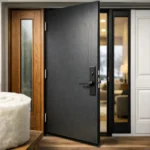
Your front door does more work than most homeowners realize. It has to stand up to weather, resist forced entry, help control energy loss, and make the house look cared for from the street. That is why an entry door buying guide matters before you compare prices. A lower quote can look appealing at first, but if the slab, frame, glass, or installation quality falls short, the long-term cost shows up quickly.
The right door is not just about appearance. It is about matching the product to your home, your climate, and how long you plan to stay in the property. If you are replacing an older door or choosing one for a new build, a better buying decision starts with knowing what affects performance and what is mostly cosmetic.
What an entry door buying guide should help you compare
A good door purchase comes down to five factors: material, energy efficiency, security, design, and installation quality. Most homeowners start with style, which makes sense because the front entry sets the tone for the home. But style should be filtered through practical needs.
For example, a door with large decorative glass can brighten a dark entryway and improve curb appeal, but it also changes privacy and thermal performance. A wood-look finish may give you the appearance you want, but the core material determines how much maintenance the door will need over time. The best choice is rarely the one with the longest feature list. It is the one that fits your budget and performs well in everyday conditions.
Choosing the right entry door material
Material is one of the biggest decisions because it affects price, maintenance, durability, and insulation.
Steel entry doors
Steel doors are a strong choice for homeowners who want solid security and dependable value. They are often more budget-friendly than premium alternatives and can deliver excellent durability when manufactured and installed properly. Many homeowners like steel because it gives them a secure feel without pushing the project cost too high.
The trade-off is that steel can dent, and lower-quality products may not hold up as well if the finish is compromised. Not all steel doors are equal, so the gauge, core, frame quality, and weather sealing all matter.
Fiberglass entry doors
Fiberglass doors are popular because they balance appearance and performance well. They resist warping, handle changing temperatures effectively, and can mimic the look of real wood without the same maintenance demands. For many homes, fiberglass hits the sweet spot between curb appeal and practicality.
They do tend to cost more upfront than basic steel options. Still, for homeowners focused on long-term value, that extra investment can make sense.
Wood doors
Wood doors offer warmth and character that many homeowners love, especially on traditional or custom homes. They can be beautiful, but they also require more upkeep. Moisture, sun exposure, and seasonal changes can all affect how wood performs over time.
For some buyers, the look is worth the maintenance. For others, especially those wanting a lower-maintenance upgrade, steel or fiberglass is the more practical direction.
Entry door buying guide for energy efficiency
An entry door should help protect the home from drafts and temperature swings, not contribute to them. That means looking beyond the slab itself. Energy efficiency also depends on the frame, the core, the weather stripping, the threshold, and how accurately the door is installed.
Insulated cores are a major factor in modern steel and fiberglass doors. Good weather sealing around the perimeter matters just as much. If the fit is poor, even a high-quality door can underperform.
Glass is another area where homeowners should slow down and compare details. Decorative glass can transform the look of an entrance, but the size, placement, and construction of the glass unit affect privacy and insulation. If natural light is a priority, there are ways to add glass without giving up too much efficiency. It simply needs to be selected carefully.
Security features that actually matter
Most homeowners want a door that feels secure, but security is not just about choosing a hard material. The full system matters.
A strong slab should be paired with a solid frame, quality hinges, reliable lock hardware, and professional installation. Weak points are often found around the frame or strike area, not the center of the door itself. That is why buying based on appearance alone can be misleading.
If security is high on your list, ask about reinforced frames, multipoint locking options, glass placement, and hardware quality. Sidelites and large glass panels can still be part of a secure design, but they should be planned properly. This is one of those areas where expert guidance is worth having because a secure-looking entry is not always a secure one.
Style, glass, and curb appeal
Your front door has a big impact on first impressions. Color, panel design, glass inserts, sidelites, and hardware all shape the look of the home. The key is choosing a design that works with the house rather than trying to force a trend that may date quickly.
A modern home may suit clean lines, narrow profiles, and simple glass shapes. A traditional home may look better with raised panels or more classic decorative glass. Black, white, charcoal, and wood-tone finishes continue to be popular because they work with a wide range of exteriors and tend to age well visually.
This is also where customization becomes valuable. Standard sizes and styles work for many openings, but some homes benefit from a more tailored solution. If your home has an unusual entry configuration, an arched opening, or you want sidelites or transoms, custom manufacturing can make the final result look intentional instead of pieced together.
Why installation quality matters as much as the door
A well-made door can still fail if it is installed poorly. Air leaks, water intrusion, sticking, misalignment, and lock issues often come back to installation problems rather than the product itself.
Professional installation should include accurate measuring, proper shimming and leveling, insulation around the frame, clean finishing work, and a final check of operation and sealing. Homeowners should also expect a clean work area and a crew that treats the home with respect. Those details matter because this is not just a purchase. It is work being done on the part of your home that gets used every day.
When homeowners compare quotes, installation is one of the easiest places for meaningful differences to hide. A lower price may leave out important labor steps or use subcontracted crews with less control over consistency. Factory-direct manufacturers with installation expertise often provide stronger accountability because the product and the install are handled as one system.
How to compare quotes without getting misled
Door quotes can vary a lot, and not always for the reasons you expect. One quote may include a better door slab but a weaker frame. Another may show decorative upgrades while leaving out premium hardware or installation details. Looking only at the total price rarely gives a clear picture.
Ask what material is being quoted, what kind of core the door has, what glass package is included, what hardware is standard, and whether installation and finishing are part of the number. You should also ask about warranty coverage and who stands behind it. A strong warranty is helpful, but a reliable local company that actually services its work is even more important.
If financing, promotions, or direct pricing are available, those can also change the value equation. A better door installed properly at a competitive monthly cost is often the smarter move than choosing the cheapest possible option and hoping it performs.
When manufacturer-direct makes more sense
For many homeowners, buying direct from a company that manufactures and installs its own products can simplify the process. It usually means better control over customization, clearer communication, and fewer layers between the product and the final installation. It can also reduce markup, which is why factory-direct pricing appeals to comparison shoppers.
Window Seal West takes that approach by combining local manufacturing, product expertise, and professional installation, giving homeowners one team to work with from quote to completion. That kind of accountability helps reduce uncertainty, especially when you are investing in a front entry that needs to perform for years.
The best door is the one that fits your home and priorities
There is no single best entry door for every home. A steel door may be the right value-driven choice for one household, while another may prefer fiberglass for lower maintenance and upgraded aesthetics. A glass-heavy design might be perfect for a dark entry, while a more solid slab makes better sense where privacy and security come first.
What matters most is buying with a clear understanding of trade-offs, not just reacting to a showroom photo or a sale price. When the material, glass, hardware, frame, and installation all work together, the result feels better every time you come home. Choose the door that solves real problems, looks right on your house, and gives you confidence long after the installation day is over.