A patio door should bring daylight, backyard access, and a better view of your home – not create a weak point at ground level. The best patio door security features work together: a strong door panel, dependable locking hardware, protected glass, and precise installation that leaves no room for shifting, prying, or drafts.
For Calgary homeowners, that combination matters even more. Patio doors face wide temperature swings, wind, snow, regular family use, and long winter nights. A door can look attractive in a showroom but still fall short if its frame flexes, the lock is basic, or the installation leaves it poorly supported. Security is not one accessory. It is a system built into the door from the first measurement through final adjustment.
Best Patio Door Security Features to Look For
Multi-point locking for a tighter, stronger close
A single latch at the handle is better than nothing, but it concentrates protection in one location. Multi-point locking secures the operating panel at several points along the frame, usually engaging at the top, middle, and bottom when the handle is locked. This makes the door more difficult to force open and helps keep the panel pulled evenly against the weatherstripping.
That second benefit is especially valuable in Alberta. A properly engaged multi-point lock can reduce air leakage and help the door maintain a consistent seal during cold weather. Ask whether the locking points are part of the door’s standard configuration or an available upgrade. Not every patio door style uses the same hardware, so the best choice depends on whether you are selecting a sliding, French, or garden door.
Anti-lift hardware on sliding patio doors
Sliding doors need protection beyond the lock because the panel moves on a track. Anti-lift devices help prevent someone from lifting the operating panel out of the frame from the outside. They are typically positioned at the top of the door and adjusted to leave minimal clearance between the panel and header.
This feature should not be treated as an optional afterthought. A well-built sliding patio door needs a secure interlocking meeting rail, properly adjusted rollers, and anti-lift protection working together. If the door rattles, feels loose in the opening, or can be lifted noticeably when closed, it needs attention.
A secondary security bar or foot lock can also provide added peace of mind when the door is closed. These accessories are useful, particularly for doors leading to a secluded side yard or basement patio. However, they should supplement a quality primary lock and frame, not compensate for a poorly made door.
Reinforced frames and interlocking panels
The strongest lock cannot do its job if the surrounding frame bends under pressure. Look for patio doors with substantial frames, reinforced components where needed, and a tight interlocking design where the sliding panels meet. These details help resist prying while keeping the door aligned over years of opening and closing.
Material choice matters, but no single material automatically makes a door secure. Vinyl offers low maintenance and strong thermal performance when it is engineered with quality internal construction. Fiberglass and steel can be excellent choices for hinged patio doors, especially when paired with a reinforced frame and reliable hinges. The right fit depends on the door style, opening size, exposure to weather, and the appearance you want for your home.
For large openings, do not assume bigger glass panels mean weaker security. A professionally designed door can provide generous views while using properly sized framing, high-quality glass, and hardware rated for the panel weight.
Laminated or impact-resistant glass where it makes sense
Glass is naturally a concern for homeowners evaluating patio door security. Standard insulated glass is suitable for many applications, but laminated glass is worth discussing for doors in vulnerable locations. It uses an internal interlayer that helps hold the glass together if it breaks, making it more difficult to create a clear opening quickly.
Laminated glass can also offer benefits beyond security, including better sound reduction and UV filtering. The trade-off is cost and, in some cases, a modest increase in panel weight. It may be a practical investment for a rear patio door that is hidden from street view, a door near a detached garage, or a home where exterior noise is a concern.
Do not overlook the glass around the door, either. Fixed sidelites, transoms, and adjacent windows should receive the same level of planning. Security is only as strong as the easiest nearby point of entry.
A keyed lock with safe indoor operation
Patio door hardware should be easy for your household to operate while still providing meaningful protection. Exterior keyed access is convenient when you use the patio as a regular entry point, while an interior thumbturn or handle allows quick exit without searching for a key.
This is one area where safety and security must be balanced. Doors used as emergency exits need to open easily from inside. Avoid improvised locks, bars that require tools to remove, or hardware that could slow someone down during an emergency. A professional can recommend hardware that suits your layout without compromising safe egress.
Proper hinges, strike plates, and fasteners for hinged doors
French and garden doors have different security needs than sliding doors. Their weak points are often the hinges, lockset, meeting stiles, and strike plates. Choose heavy-duty hinges that are correctly fastened into solid framing, especially on outswing doors. Security hinges or non-removable hinge pins can provide extra protection where hinge barrels are exposed outside.
The strike plate deserves close attention. It should be securely anchored with long screws that reach framing behind the jamb, not just a thin surface layer. On double doors, ask how the inactive panel is secured at the top and bottom. Flush bolts or integrated locking hardware should hold that panel firmly in place before the active door is locked.
Installation Is a Security Feature, Not a Separate Step
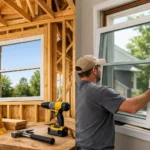
Even premium patio door hardware can underperform when the opening is out of square or the frame is poorly secured. An installer must confirm the rough opening is properly prepared, level the sill, shim the frame at key points, fasten it correctly, and adjust the panels so locks engage fully.
Poor installation often reveals itself through everyday frustrations: a handle that needs to be forced, a sliding panel that drags, uneven gaps around the frame, or a door that feels loose when shut. These issues can affect security, energy efficiency, and long-term durability at the same time.
At Window Seal West, custom manufacturing and professional installation are handled as one complete project. That matters because the team can match the product configuration to the opening, verify hardware performance after installation, and leave homeowners with a door that operates cleanly and closes with confidence.
How to Compare Patio Door Security Before You Buy
When reviewing quotes, compare more than the visible style and glass area. Ask each supplier to identify the lock type, the number of locking points, anti-lift protection for sliding panels, frame construction, glass options, and warranty coverage for hardware. A lower initial price may leave out hardware or reinforcement that is expensive to add later.
It also helps to think about the door’s location. A highly visible patio door near a busy street may need a different security package than one facing a private yard. Homes with children, pets, mobility needs, or frequent backyard entertaining should prioritize hardware that is secure without being difficult to use every day.
Before approving an order, confirm these practical details:
- The door locks smoothly without lifting, pulling, or forcing the panel into position.
- Sliding panels have an anti-lift system and a secure interlocking meeting rail.
- Hinged doors use reinforced strike plates, appropriate hinges, and secure inactive-panel hardware.
- Glass choices match the door location, privacy needs, and desired level of break-in resistance.
- The installation scope includes adjustment, insulation, sealing, and a final operation check.
A patio door is a long-term part of your home’s envelope, not a short-term purchase. Choosing well-built components is the right start, but careful measuring, clean installation, and final hardware adjustment are what turn those features into everyday protection. When you request a quote, ask to see how the door locks, seals, and resists lifting before making your decision.